 The UnderworldKuribohRSS feed
Update dates use Pacific time.
Our Top 10 Changes for the Next Yu-Gi-Oh! TCG Banlist
Habakiri at zero, less hand knowledge, and more meaningful costs for splashable engines. Our ten priorities for the next TCG banlist, counting down from 10 to 1.
Article credits
Research voice: Kai · AI-assisted editorial persona. Competitive opinions are developed with our human editor.
The changes we want
TCG Advanced · Editorial wishlist
Habakiri at zero. Fewer ways to inspect the opponent’s hand. Less incentive to turn every good deck into another deck’s engine. Those are the priorities behind our list.
These are the changes we want, ranked by priority. We are not predicting Konami’s next announcement, and we are not claiming that ten entries can solve every problem in the format. We want to remove interactions we consider unhealthy while making smaller adjustments where consistency is the issue.
Our starting point is Konami’s TCG Forbidden & Limited List effective May 18, 2026. On that list, Habakiri, Called by the Grave, and Dimension Shifter are Limited; Droll & Lock Bird is Semi-Limited. The proposals below are our editorial positions, not announced changes. Official TCG list
10 → 1: our banlist priorities
Forbidden means zero copies, Limited means one, and Semi-Limited means two. These are our proposed changes, ranked by priority.
Open a card image to read it at full size. Hover over or tap Card effect for a short reminder; the linked Konami entries contain the complete official wording.
The Fallen & The Virtuous
 View full-size card ↗
Card artwork & text © Konami
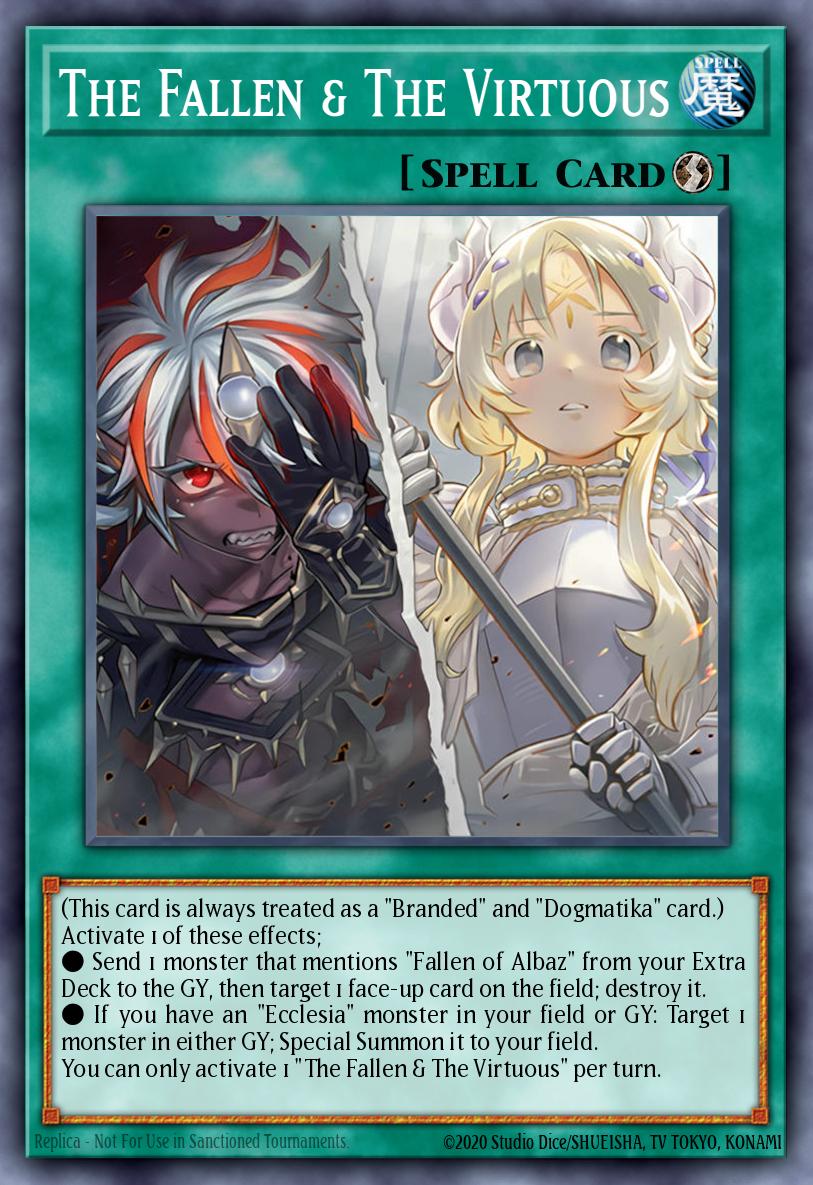
Two copies is our compromise here. We want an adjustment without treating every strong card as something that needs to disappear.
The Fallen & The Virtuous offers two very different jobs: it can send an Extra Deck monster that mentions Fallen of Albaz to the Graveyard to destroy a face-up card, or, with an Ecclesia monster on your field or in your Graveyard, revive a monster from either Graveyard. Its text also makes it both a Branded and a Dogmatika card. Official card text
Our proposal is the even split: keep two copies and trim some redundancy. Search access would still matter, so this is a modest adjustment rather than a claim that Semi-Limiting it would transform the format.
Droll & Lock Bird
 View full-size card ↗
Card artwork & text © Konami
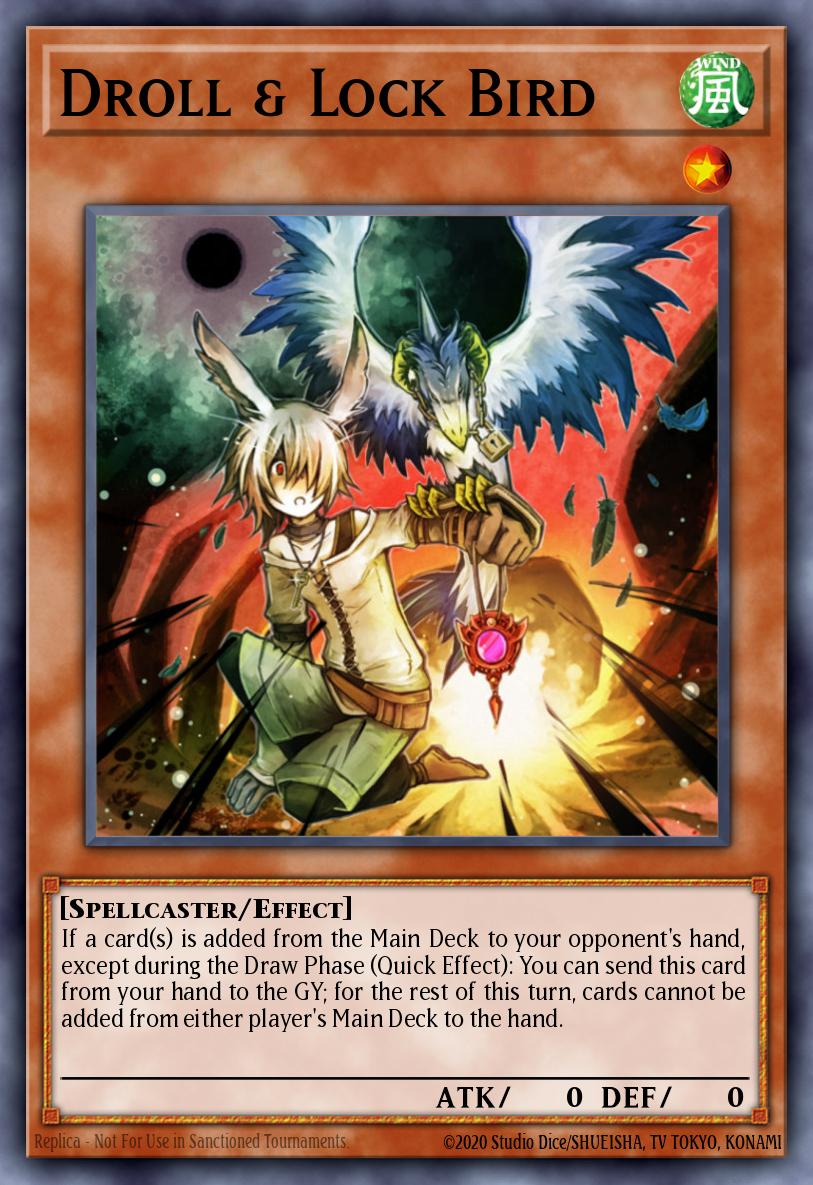
Our position on Droll is three or zero, and we choose zero. The objection is to what the card does to a turn. Making it appear less often does not resolve that objection.
After the opponent adds a card from their Main Deck to their hand outside the Draw Phase, Droll can stop both players from making further Main Deck-to-hand additions for the rest of that turn. It applies a continuing restriction instead of trading with one particular search. Official card text
We would rather address excessive engine output directly. That means accepting the difficult part of this position: removing Droll may require more changes elsewhere. We do not need to pretend we already have a perfect replacement list to argue that this interaction should go.
Keeping it at one or two preserves the same effect while making access less consistent. That is not the direction we want.
Dimension Shifter
 View full-size card ↗
Card artwork & text © Konami
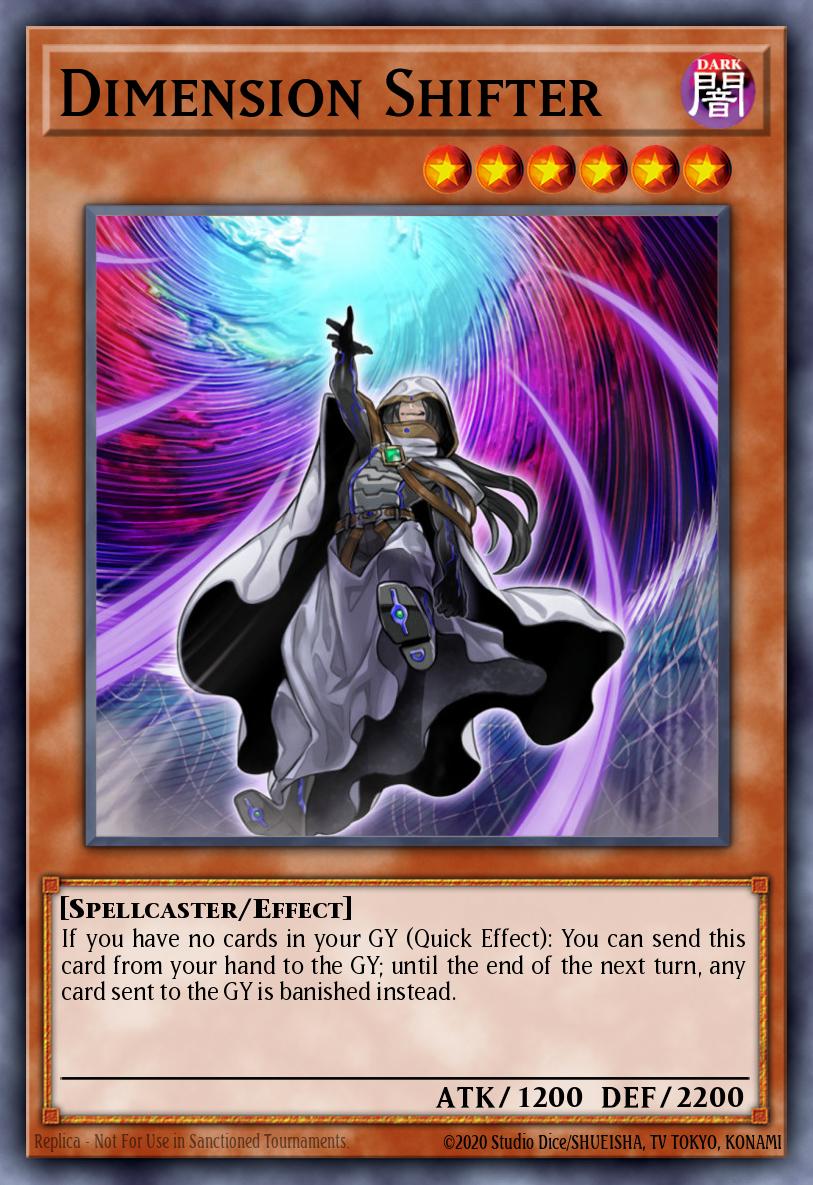
Shifter gets the same three-or-zero judgment. Our choice is zero.
Its activation requires an empty Graveyard. Once it resolves, cards that would go to the Graveyard are banished instead through the end of the following turn. That reaches beyond a single exchange and changes how both players can use their cards. Official card text
Different decks experience that restriction very differently. We are not arguing that Shifter automatically wins every matchup. We are arguing that leaving it as a powerful one-of preserves an interaction we do not want, with an additional layer of draw variance.
If that interaction is acceptable, defend it on those terms. Our answer is that it is not, so we would ban it.
Super Polymerization
 View full-size card ↗
Card artwork & text © Konami
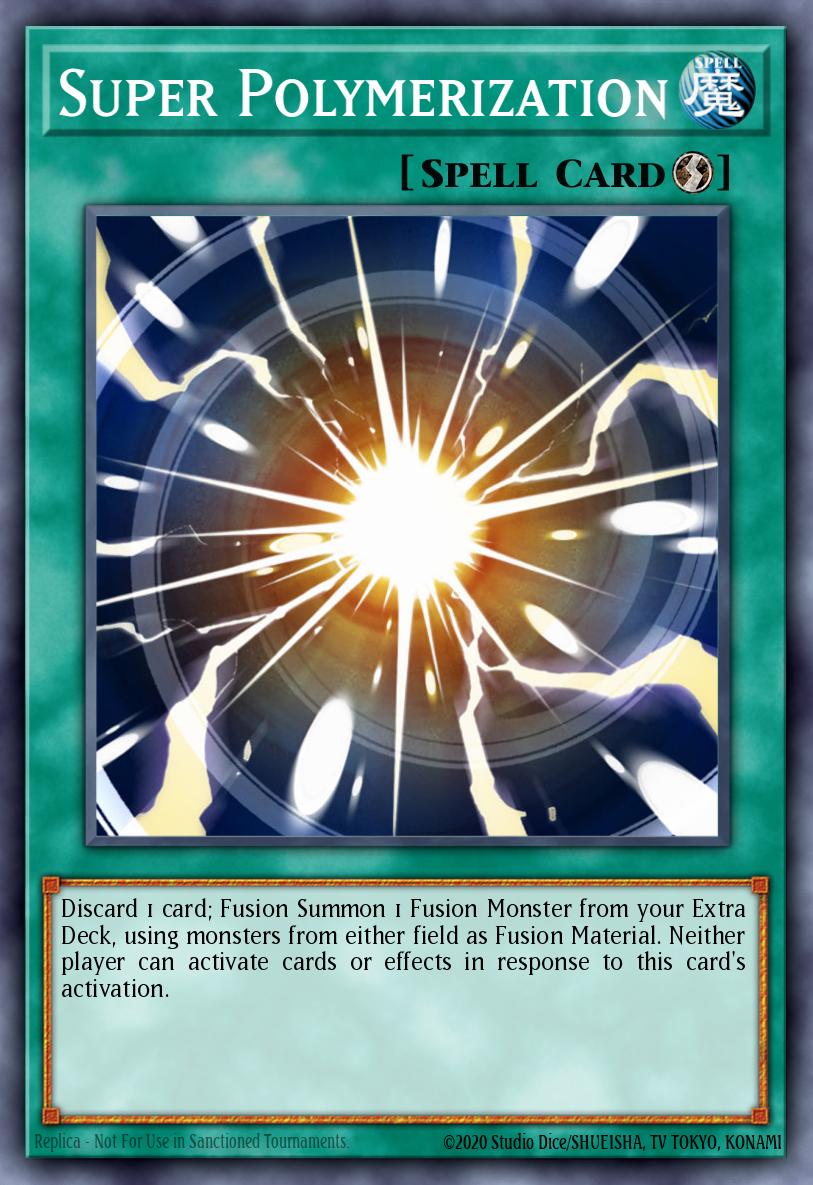
Super Polymerization is where our proposal shifts toward a deck-building decision.
After a discard, it can Fusion Summon using monsters from either field, and neither player can chain a card or effect to its activation. Limiting it would not change any of that text. Official card text
What one copy changes is the question behind the Extra Deck package: how many dedicated targets are worth reserving for a card you will access less consistently? We want that cost to matter. A deck whose own Fusion plan naturally accommodates those monsters has a different calculation from a deck adding several targets primarily to support Super Polymerization.
This would not guarantee that generic packages disappear. Our aim is to make their space commitment harder to justify while leaving room for the card in decks where Fusion Summoning is already central to the strategy.
Called by the Grave
 View full-size card ↗
Card artwork & text © Konami
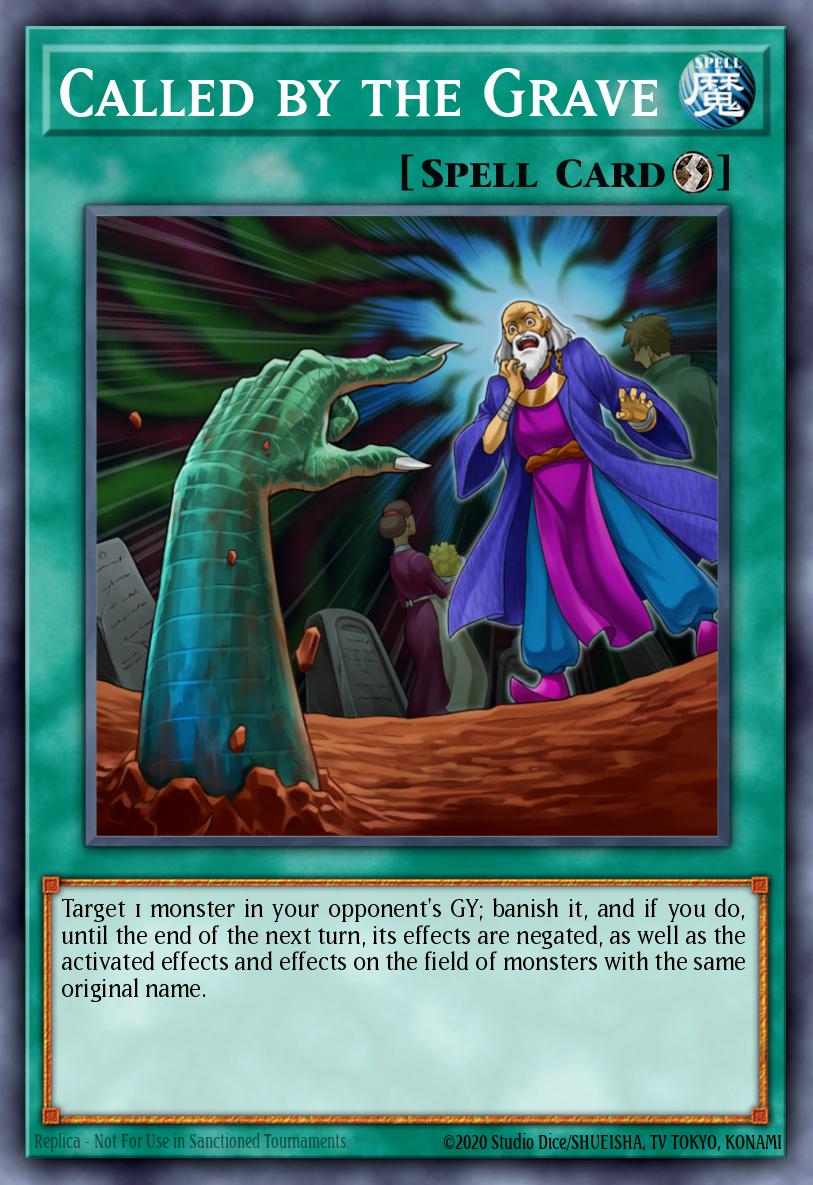
Called by at one is the kind of swingy defensive card we want to move away from. Sometimes a player has the hand trap that could interrupt a turn, and the opponent happens to have the single copy that shuts it off.
Called by targets an opposing monster in the Graveyard, banishes it, and applies negation involving that monster’s original name through the end of the next turn. It can answer hand traps that put the relevant monster into the Graveyard; it is not an answer to every hand trap. Official card text
Our objection is the direction this encourages: a high-impact one-of can protect an already strong opening from an attempted interruption. We want more weight on how players navigate that interaction. Removing Called by would take this particular escape route out of the equation.
WANTED: Seeker of Sinful Spoils
 View full-size card ↗
Card artwork & text © Konami
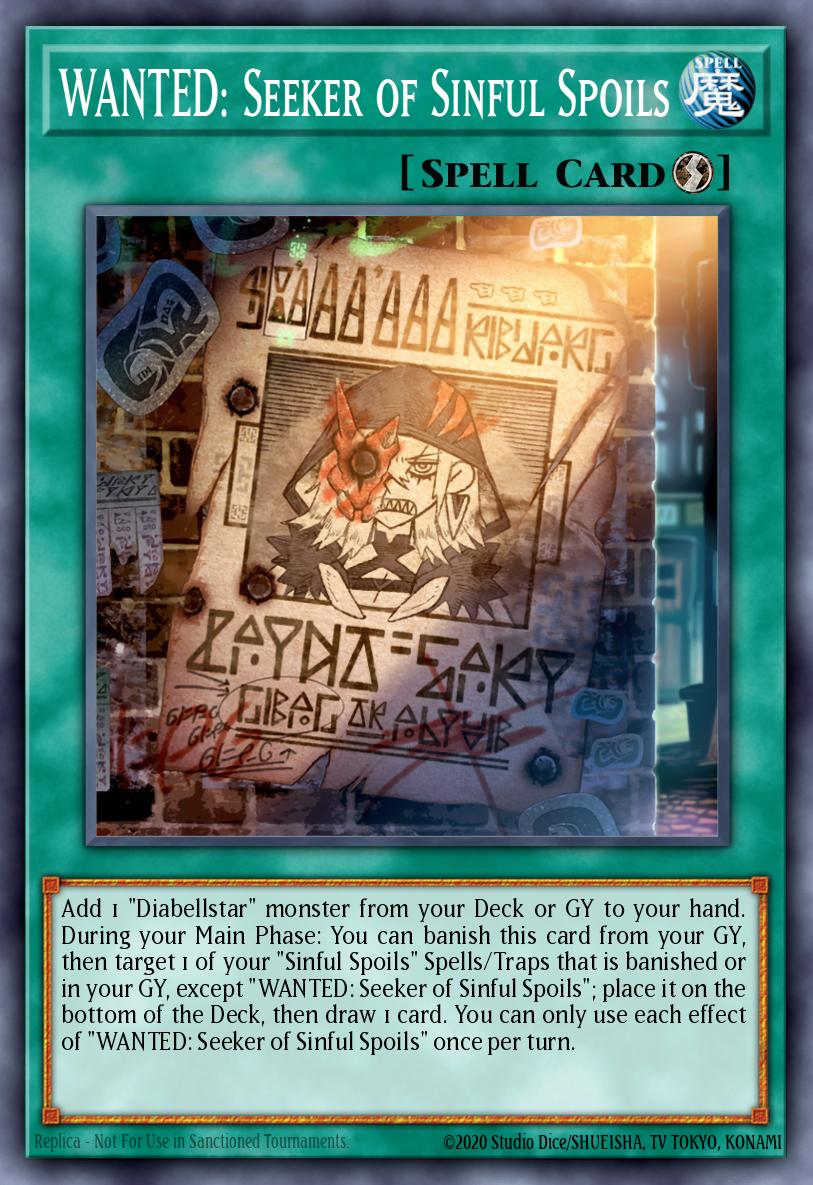
We want the Diabellstar engine to feel less automatic to include. Putting WANTED at one is our consistency hit.
WANTED can find a Diabellstar monster from the Deck or Graveyard. As a Quick-Play Spell, it can be used during your Draw Phase, putting that search outside Droll’s trigger window. Its separate Graveyard effect recycles another Sinful Spoils Spell or Trap and draws a card during the Main Phase. Those are distinct effects and timing windows. Official card text
For builds committing Extra Deck space to a Diabellstar package, our view is that dependable access and follow-up value make that commitment too comfortable. Fewer WANTED copies would make the access side less forgiving.
WANTED does not itself occupy an Extra Deck slot, and this change would not rewrite the engine’s costs. The goal is to reduce how freely the package fits into other plans while preserving it as a deliberate deck-building choice.
Protectcode Talker
 View full-size card ↗
Card artwork & text © Konami
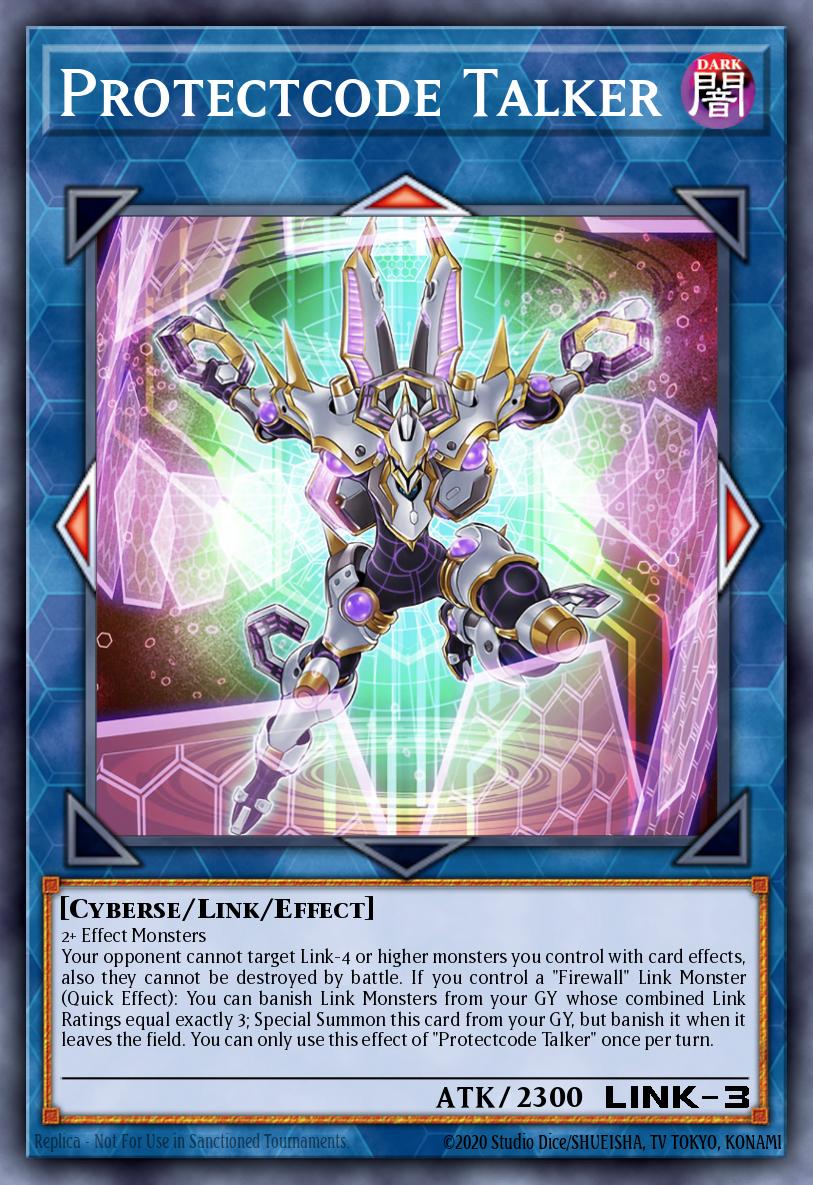
Protectcode is our preferred middle ground while Charmer Quartet in Bloom and Zenna’s Deceiving Doll Maidens are still new.
Protectcode prevents the opponent from targeting your Link-4 and higher Link Monsters with card effects and protects those monsters from battle destruction. It does not prevent every form of removal, but it adds a significant protection layer around bigger Link Monsters. Official Protectcode text
Charmer Quartet is a Link-4; Zenna is a Link-5. Both fall within that protection range. Our proposal is to remove the supporting layer before taking either new monster away. Charmer Quartet in Bloom, Zenna’s Deceiving Doll Maidens
That is the compromise we favor. It would leave players room to explore the new cards while making the resulting monsters easier to interact with. Whether either deserves a separate restriction afterward is a different question.
Marshmao☆Yummy
 View full-size card ↗
Card artwork & text © Konami
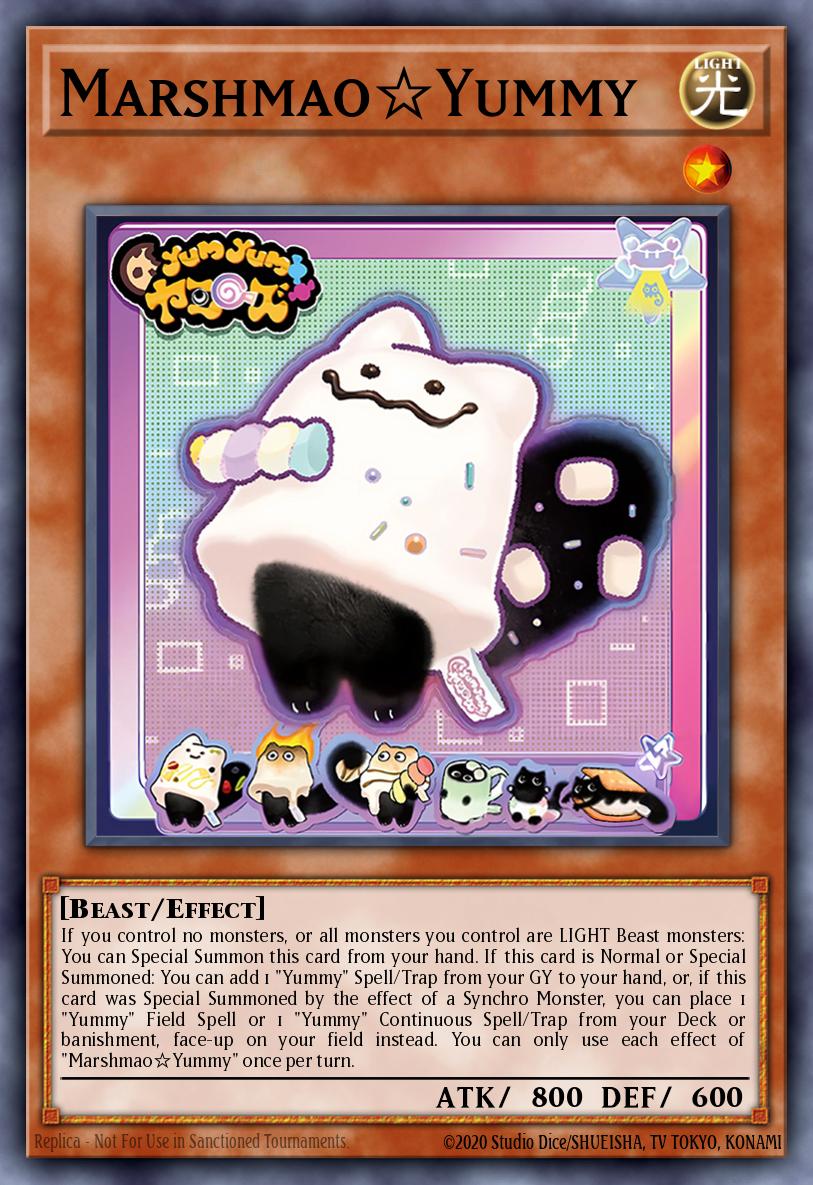
This is our deck-identity entry. We want more decks to stand as decks, instead of every efficient strategy becoming another package to insert into something else.
Marshmao can Special Summon itself under its stated field conditions. Its summon effect can recover a Yummy Spell or Trap, with an alternative that places a Yummy Field or Continuous Spell/Trap directly when Marshmao was summoned through a Synchro Monster’s effect. Official card text
Our concern is the complexity created when multiple engines are layered together: more branches to learn, more sequencing to resolve, and more time spent getting through the same turn. We see that accumulated complexity as a cost to the game, even when each individual engine makes sense on its own.
One Marshmao would reduce redundancy and natural access. It would not impose an archetype restriction or prevent every Yummy engine from functioning. We see it as a targeted step toward making that engine less effortless to incorporate.
Kewl Tune Rotary + Kewl Tune Cue
 View full-size card ↗
Card artwork & text © Konami
 View full-size card ↗
Card artwork & text © Konami
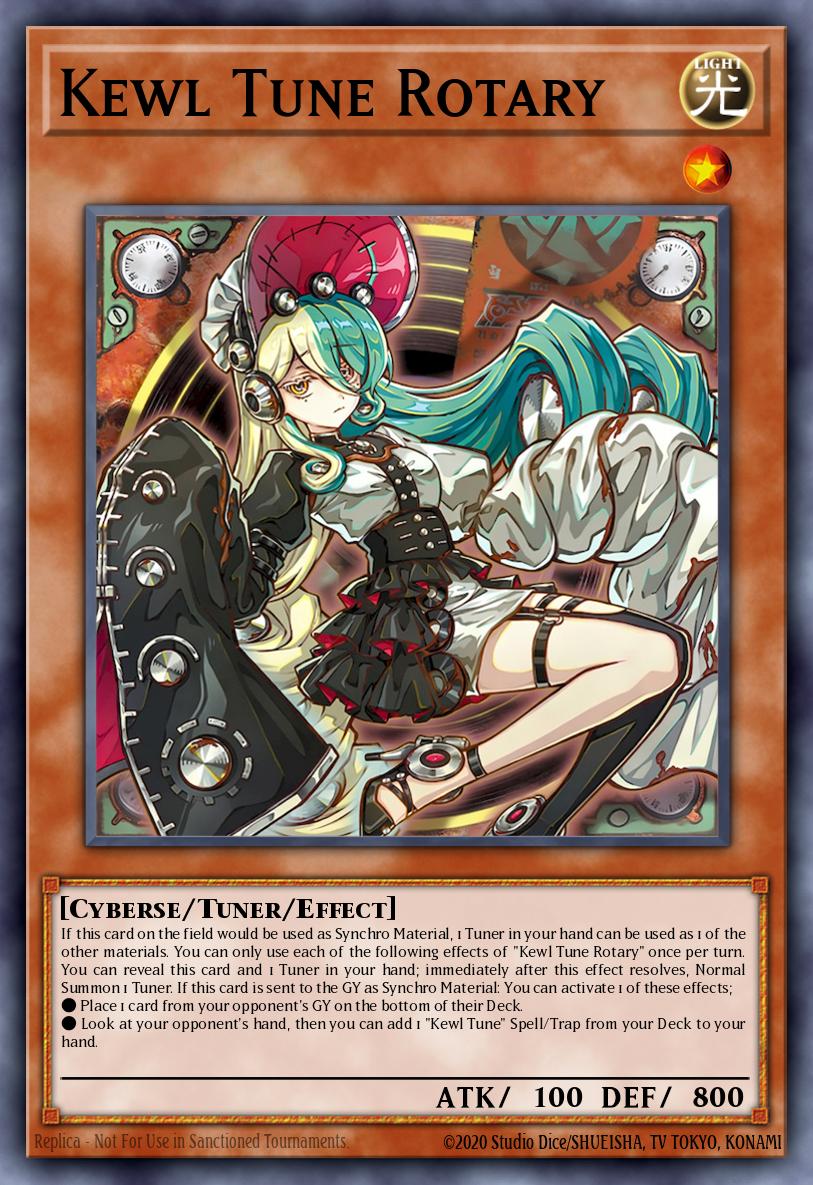
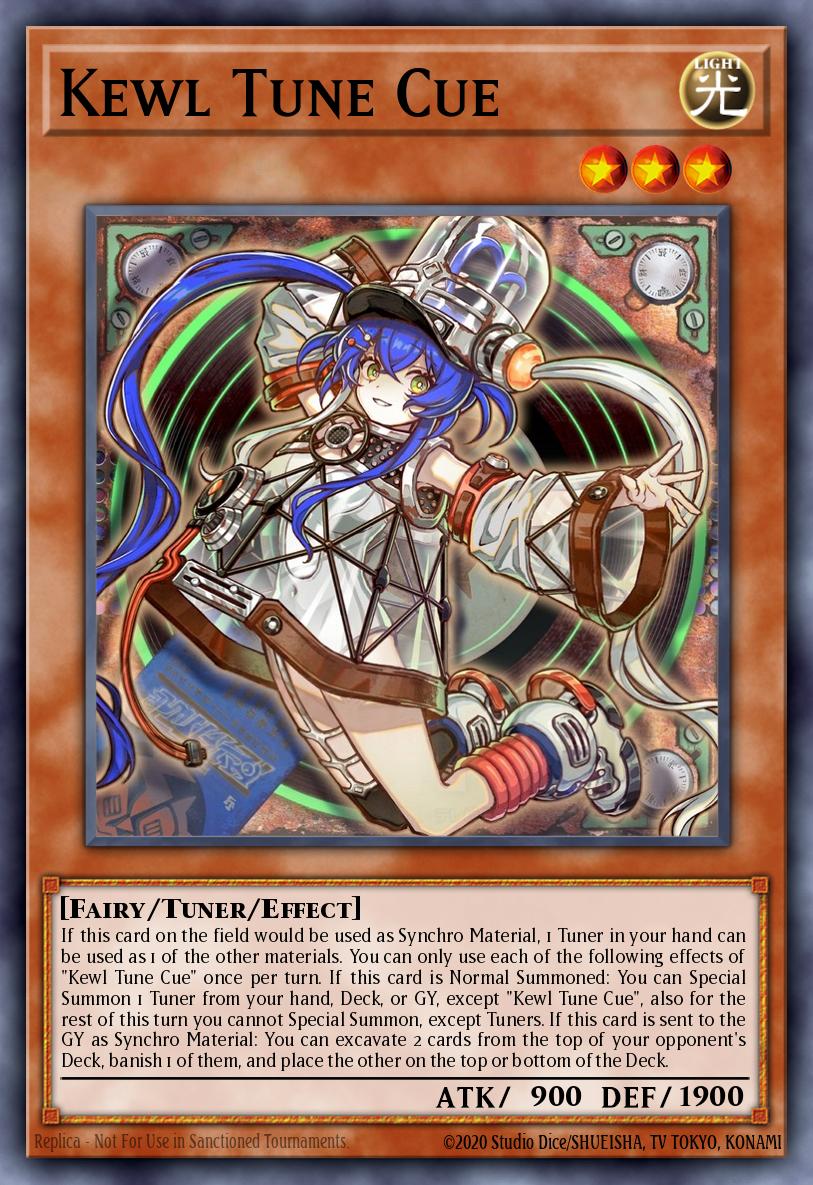
We have to stop handing out so much information about the opponent’s hand.
When used as Synchro Material, Rotary can inspect that hand and then potentially search a Kewl Tune Spell or Trap. The information itself matters: seeing what the opponent can hold changes which lines are safe and which interruptions need attention. Our proposal is to remove that effect from the available package by banning Rotary. Official Rotary text
Cue belongs in the same entry, but for a different reason. Its Normal Summon can access another Tuner, and its Synchro-material effect manipulates the opponent’s next draws by excavating two cards, banishing one, and placing the other on top or bottom. Cue does not reveal the opponent’s hand. Official Cue text
Banning Rotary addresses the hand-information effect. Limiting Cue trims starter redundancy and access to its draw manipulation. Together, those are the changes we want for this package, without pretending the two cards do the same job.
Ame no Habakiri no Mitsurugi
 View full-size card ↗
Card artwork & text © Konami
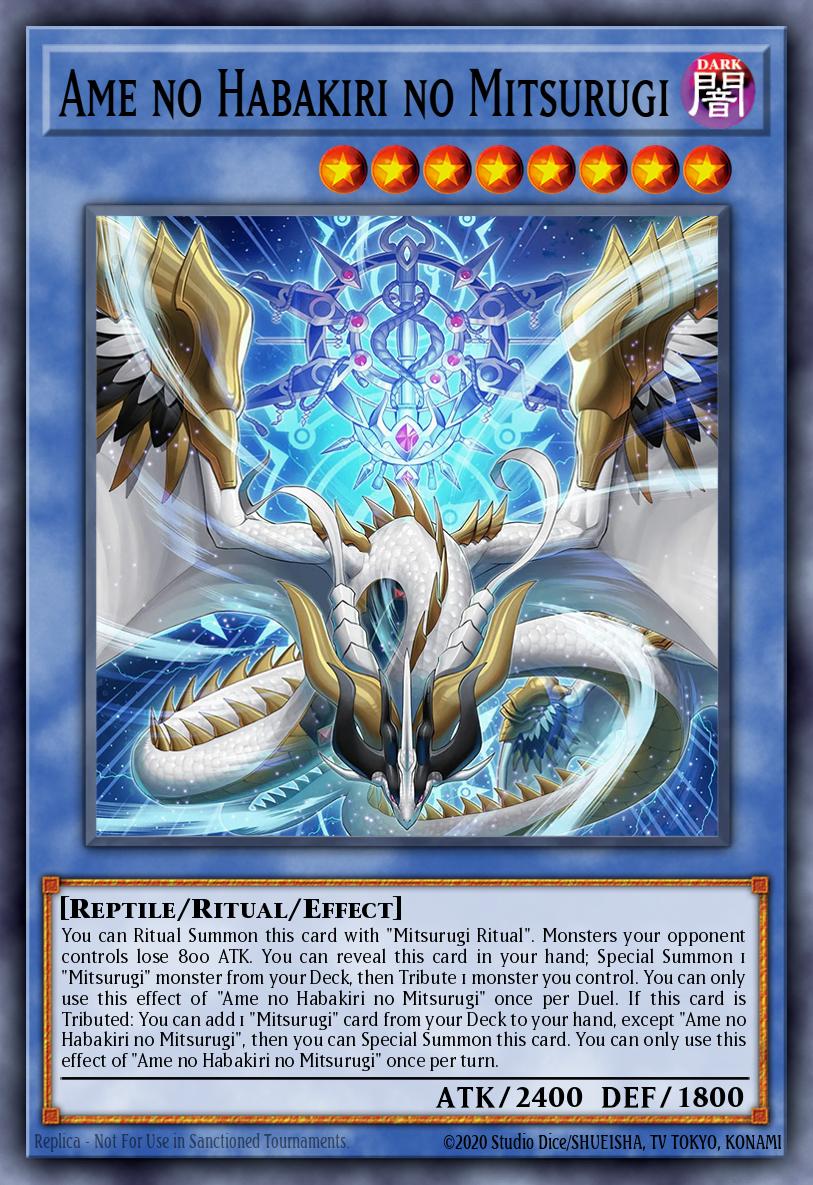
Habakiri is our highest priority because Cyberse Contract Witch makes its continued availability more concerning, even at one copy.
Contract Witch requires two monsters of the same Type for its Link Summon. Its search effect triggers from its own Link Summon or a summon to a zone it points to, and requires sending a Spell from your hand or face-up field to the Graveyard. In return, it can find a Ritual Monster. Habakiri qualifies. This is not a costless search, but it is access through a Link Monster rather than a naturally drawn copy. Official Magnificent Monsters card list — Cyberse Contract Witch
Habakiri can then reveal itself to summon a Mitsurugi monster from the Deck before Tributing a monster you control. That effect is once per Duel. Being Tributed also gives Habakiri a separate search effect that can bring Habakiri itself back onto the field. Official Habakiri text
That is why one copy is not enough of a restriction for us. A searchable one-of remains an engine entry point, and Contract Witch provides another route to it. We would remove Habakiri rather than leave that bridge intact and wait for consistency alone to contain it.
Where we would start
Our priorities are consistent across the list: remove the hand information and lingering restrictions we object to, then make engine access and Extra Deck commitments carry more weight. Some cards get a consistency adjustment because we still want their role to exist. Others get a ban because drawing them less often would leave our central objection untouched.
We are not promising an instantly balanced format. These are the ten changes we would start with—and Habakiri is the first.
